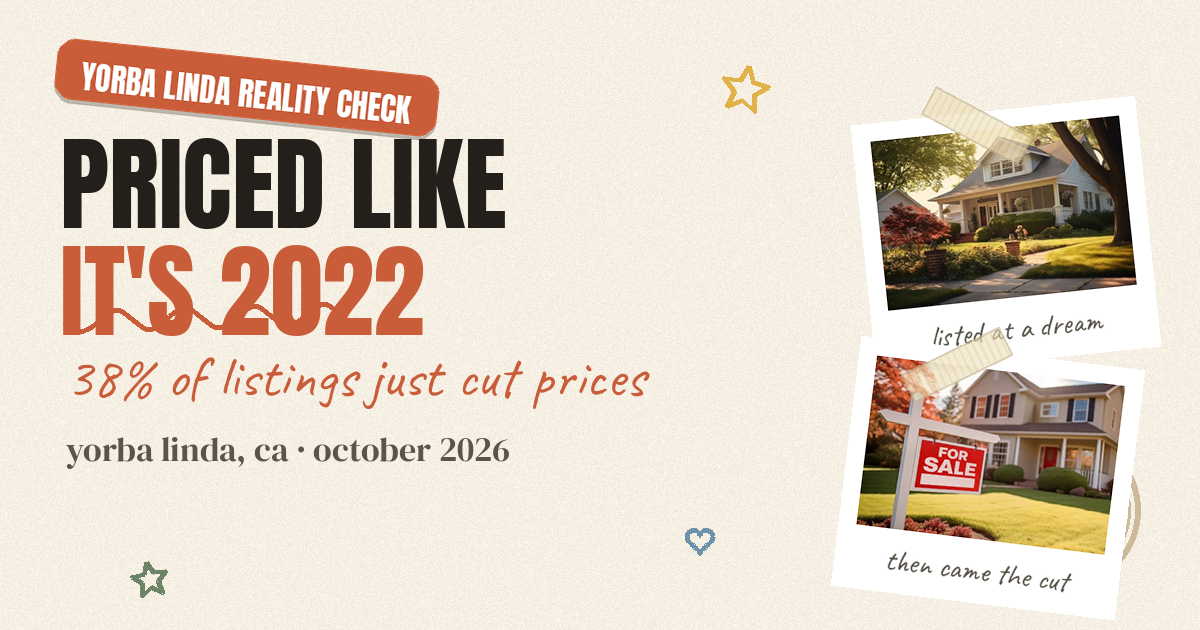
Zestimate vs. Reality: Why Online Home Values Mislead Sellers (and Cost Them Money)

Almost every seller does the same thing first: types their address into Zillow, sees a number, and builds their entire pricing strategy around it.
That number — the Zestimate — looks precise. It's not. And pricing your home off it is one of the most expensive mistakes a seller can make in 2026. Here's why, using Zillow's own published accuracy data.
How the Zestimate is actually built
The Zestimate is an automated valuation model (AVM) — an algorithm that crunches public records, tax data, past sales, and listing information, then spits out a number. What it has never done: stood in your driveway. It hasn't walked your kitchen, smelled the new paint, seen the unpermitted addition, or noticed the power lines behind the backyard.
It models the average version of your house. You don't own the average version.
Zillow's own accuracy numbers (read them closely)

To Zillow's credit, they publish their accuracy data — and it's more honest than most sellers realize:
- On-market homes: median error of 2.4% nationally. Sounds tight — but notice the catch: once a home is listed, the algorithm can see the actual list price and recent activity. It's essentially copying the agent's homework. And 30.8% of on-market Zestimates still land more than 5% off the sale price.
- Off-market homes: median error jumps to 7.49% — roughly three times worse. Only 43.1% land within 5% of actual value. And "median" means half of homes miss by more than that.
Do the math on a $900,000 Fullerton home: a 7.49% median miss is ~$67,000 in either direction. That's not a rounding error — that's a down payment on someone else's house.
And here's the kicker: when you're casually checking your home's value as a potential seller, your home is off-market. You're looking at the least accurate version of the number Zillow publishes.
Why the Zestimate is worst for exactly your home
The algorithm is weakest where it matters most to sellers:
- Unique homes. Remodels, additions, custom finishes, ADUs — the model prices the floor plan on public record, not the $80K kitchen you put in.
- Wrong inputs. Public records are full of errors: wrong square footage, missed permits, outdated bed/bath counts. The model doesn't know; it just calculates. One documented case this year: county records showed 2,200 sq ft on a home that actually measured 3,400 — a ~$75,000 undervaluation from bad data alone.
- Micro-markets. Zillow prices the zip code. Your street, your school boundary, your side of the freeway — that's where real value lives, and the algorithm smooths right over it.
The real cost of overpricing: the stale-listing death spiral
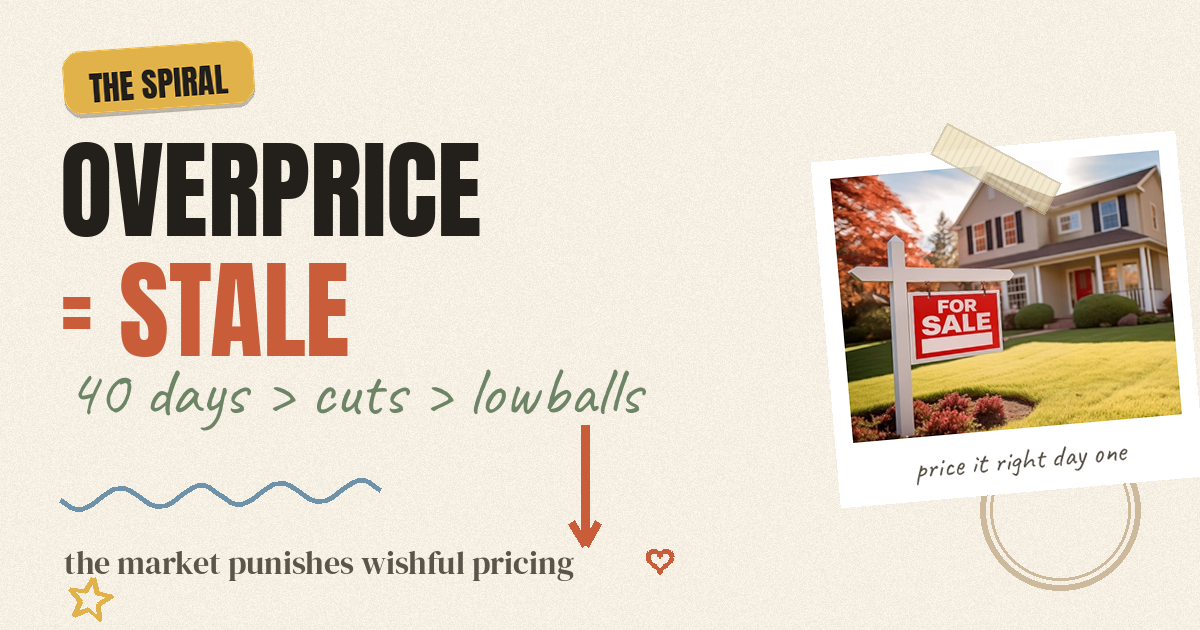
Here's where the Zestimate actually costs you money. Sellers who anchor to an inflated Zestimate overprice — and in 2026's market, overpricing triggers a predictable spiral:
- Days pile up. The typical Fullerton home took ~40 days to sell in late September. Overpriced homes take far longer — and every week, buyers assume something's wrong.
- Price cuts follow. ~14% of Fullerton listings cut prices in late September. Each cut signals weakness and resets buyer expectations downward.
- The stale stigma sets in. Buyers don't think "great, a discount." They think "what's wrong with it?" — and the offers that finally come are lower than what a sharp initial price would have drawn.
The cruelest irony: overpricing to "leave room to negotiate" almost always nets less than pricing it right on day one. I've watched it happen. Don't learn this one the expensive way — I wrote about pricing strategy here from the buyer's side, and the lesson is the same from yours.
What a real CMA does that the algorithm can't
A comparative market analysis from a local agent isn't just "comps." It's judgment:
- Which comps actually compare. Same micro-neighborhood, similar condition, recent sales — not a model grabbing whatever sold within a mile.
- Condition adjustments. Your remodeled kitchen vs. their original 1978 one. The algorithm guesses; an agent who's walked both knows.
- Current buyer behavior. What offers are actually being written this week in Fullerton — not what closed three months ago.
- Pricing strategy. List price isn't just a number; it's a signal. Price slightly sharp to create competition, or price at market to sell clean — the right call depends on your home, your timeline, and this month's inventory.
The bottom line
The Zestimate is a fun starting point. It's not a pricing strategy. In a market where the typical home sits 40 days and buyers are watching every price cut, the cost of trusting an algorithm over a human who knows your street is measured in tens of thousands of dollars.

Curious what your Fullerton home is actually worth — not the algorithm's guess? I'll run a real CMA with actual comps and walk you through it, free, no pressure. DM me "HOME" on Instagram or call/text (714) 732-1860.
Ruben Martinez | Redfin Agent | DRE #01946610 | Serving Fullerton & North OC
Categories
Recent Posts