
What Home Inspectors Miss: The Blind Spots That Cost Buyers Thousands

A home inspection feels like a safety net. You pay $400–$600, a guy with a flashlight and a ladder spends three hours in the house, and you get a 40-page report. Done, right?
Not quite. A standard home inspection is visual and non-invasive — the inspector looks, tests what they can reach, and reports. They don't disassemble anything. They don't open walls. They don't scope pipes. And the things they can't see are exactly the things that cost five figures.
Here's what Reddit's homebuyer threads complain about most — the blind spots, and how to cover each one.
1. The sewer line ($5,000–$15,000 surprise)
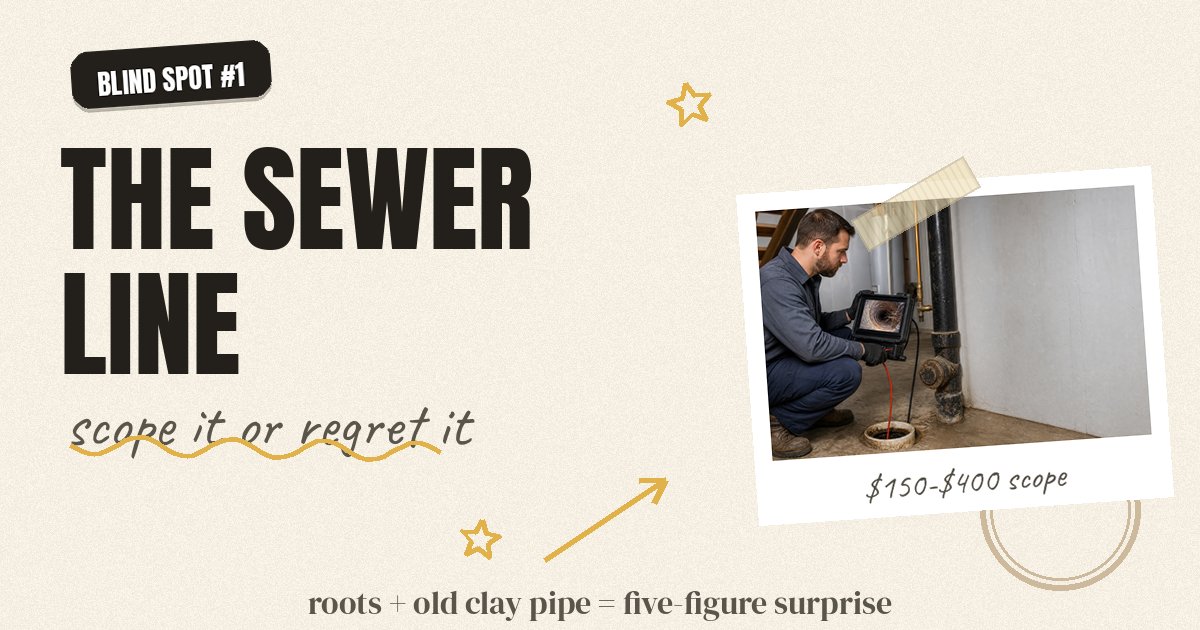
The single most expensive thing a standard inspection skips: the sewer lateral — the pipe running from your house to the street. The inspector doesn't scope it. Tree roots, collapsed clay pipe, bellies in the line — invisible until sewage backs up into your shower.
Cover it: Order a sewer camera scope as a separate inspection ($150–$400). On any Fullerton home built before the 1980s — which is a lot of our housing stock — this is non-negotiable.
2. Inside the HVAC system
The inspector will turn the heat and AC on and confirm they run. That's it. They won't pull the furnace apart to check the heat exchanger for cracks (a cracked heat exchanger can leak carbon monoxide — and means a full furnace replacement). Same for the AC's internal coils and refrigerant levels.
Cover it: On older systems, pay for an HVAC-specific inspection ($100–$250) from a licensed contractor. If the system is 15+ years old, budget for replacement in your offer math.
3. The roof — and whether you can insure it

Here's the one that kills deals in 2026: the inspector notes the roof's age and visible wear, but your insurance company gets the final vote. In California, insurers are increasingly picky about roof condition — and your lender requires an insurance binder before funding. No binder, no loan.
A roof the inspector called "aging but serviceable" can still get you declined by an insurer, sending you scrambling for expensive coverage days before closing.
Cover it: Get insurance quotes during escrow, not after — the binder is your lender's critical path. If the roof is 20+ years old, get a roofer's opinion in writing, not just the inspector's.
4. Appliances (checked for "does it turn on")
Dishwasher runs? Check. Oven heats? Check. But the inspector doesn't verify the dishwasher actually drains, the fridge's ice maker works, or the washer hookups don't leak behind the wall. Appliances are tested at the most surface level possible.
Cover it: Run a full cycle on everything during your final walkthrough (see #7). Ask for appliance ages — and check whether they're covered by any warranty the seller transfers.
5. Permits and warranties on seller-done repairs
The seller "just remodeled the bathroom" or "replaced the water heater last year." Great — where are the permits? Unpermitted work is one of the most common Reddit horror stories: the city flags it later, insurance won't cover it, and you inherit the liability.
Cover it: Before closing, demand the paper trail: permits pulled, final sign-offs, paid invoices from licensed contractors, and warranty transfer documents for anything with a warranty (roof, HVAC, water heater). No paperwork, no credit for the "upgrade" — price it as if the work doesn't exist.
6. Who your inspector works for
This one isn't about the house — it's about the process. A lot of buyers use the inspector their agent recommends. Sometimes that's fine. But an inspector who gets steady referrals from an agent has a quiet incentive to keep transactions moving — soft-pedaling findings that might kill the deal.
Cover it: Hire your own inspector. Look for ASHI or InterNACHI certification, read actual reviews, and be there in person for the last hour. The report tells you what they found; being there tells you how worried they are.
7. The final walkthrough — your last line of defense
The final walkthrough isn't a formality. It's your last chance to catch what changed since the inspection. Quick checklist:
- Run every faucet, flush every toilet, run the dishwasher and washer
- Test every light switch, outlet, and the garage door
- Confirm agreed repairs were actually completed (with invoices)
- Check that the seller's belongings are gone and nothing's damaged from the move-out
- Open and close every window and door
If something's wrong, you can delay closing. That's the whole point of the walkthrough.
Never waive the inspection without understanding the cost
In a buyer's market like Fullerton's right now — homes sitting 40+ days, sellers negotiating on stale listings — there's no reason to waive your inspection contingency. Waiving made sense in 2021 when 30 offers competed for one house. Today it just means buying someone else's problems at full price.

Buying in Fullerton or North OC? I'll help you build the right inspection game plan for the specific house — which specialists to call, what to ask for, and how to negotiate what we find. Free buyer consult: DM me "HOME" on Instagram or call/text (714) 732-1860.
Ruben Martinez | Redfin Agent | DRE #01946610 | Serving Fullerton & North OC
Categories
Recent Posts